How better reporting can save time, transform conversations and stop the spuddling.
Imagine two board meetings.
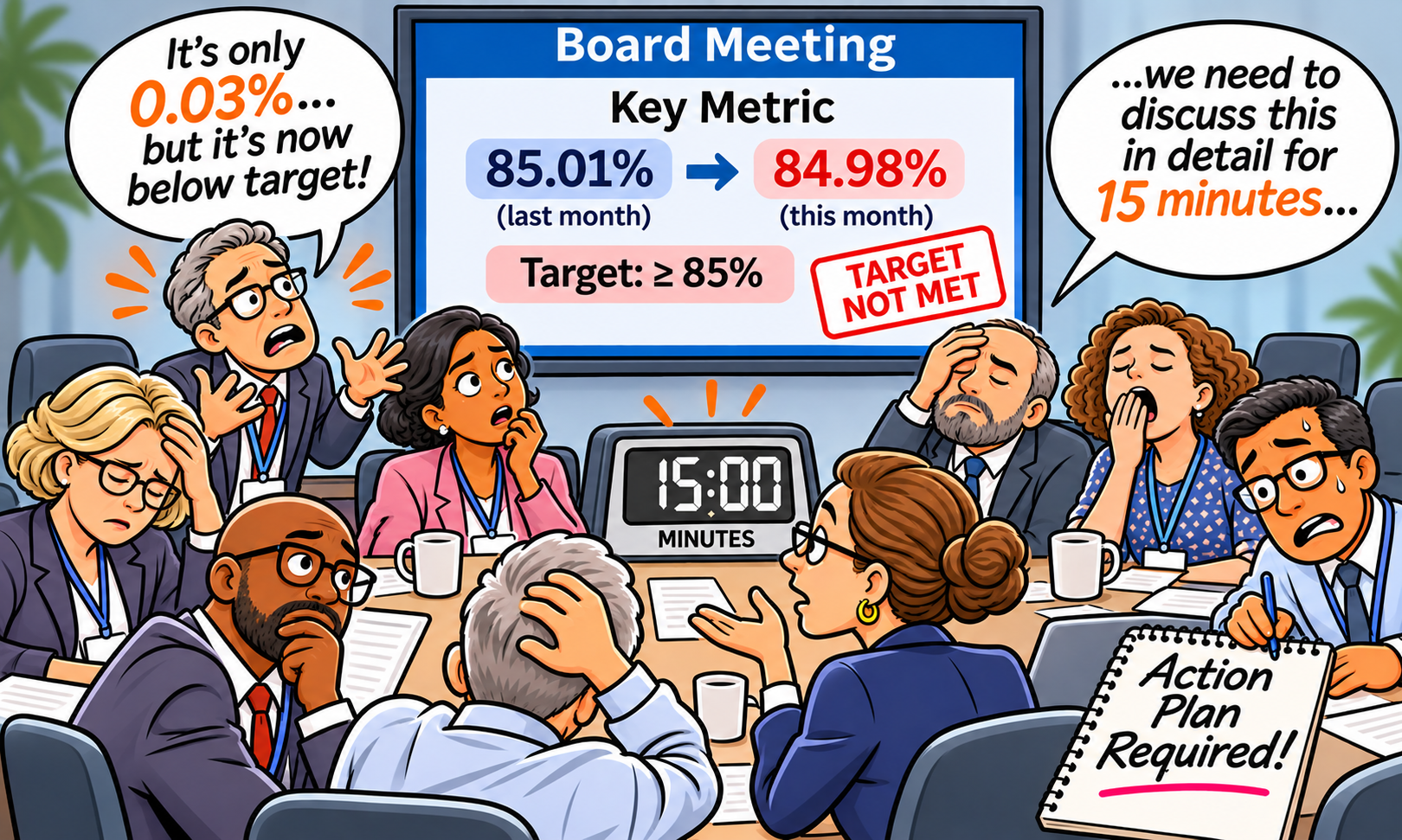
In the first, someone is explaining why performance has fallen by 0.3% since last month. A non-executive director wants to know what’s gone wrong. An executive promises to investigate. An action is recorded.
Thirty minutes later, everyone moves on.
In the second meeting, exactly the same data is presented using statistical process control (SPC).
The board can see that nothing significant has changed. No lengthy explanation. No unnecessary investigation. No action plan destined to gather dust.
Instead, they spend their time discussing a service where performance really is deteriorating — something that had previously gone unnoticed because the indicator was still green.
Same data. Different conversations. Very different use of everyone’s time.
And that, in a nutshell, is what stamping out spuddling can achieve.
So what difference does it make?
Fewer pointless conversations. No more demanding explanations for every little fluctuation when nothing significant has changed. We might even finish a meeting early. Steady on.
Fewer nasty surprises. A green indicator doesn’t necessarily mean everything is fine. SPC can reveal deterioration before a target is breached, allowing leaders to recognise problems earlier.
Recognising genuine improvement. Performance has risen from 83.2% to 84.1%. Congratulations! Except it’s been bouncing between 81% and 86% for two years. Nothing has actually changed. SPC helps us recognise improvement that’s real, rather than celebrating a lucky month.
Better use of precious resources. Every unnecessary investigation, action plan and meeting takes time. Better reporting helps us focus attention where it can make a difference. And sometimes the most sensible response to the latest number is to do absolutely nothing.
Better challenge and assurance. Instead of asking “Why has it gone down?” or “When will it be green again?”, leaders can ask “Has anything actually changed?”, “Is this process capable of delivering what we need?” and “What evidence do we have that our improvement efforts are working?”
But does reporting using SPC make any difference?
Well, there’s some encouraging evidence.
Research published in BMJ Leader in 2021 examined the impact of the NHS Making Data Count board development programme, which I established and led.
It found substantial increases in the use of SPC reporting, with board members reporting greater confidence in interpreting data and making decisions. Interviews also suggested that conversations were changing, with less attention given to insignificant fluctuations and more focus on meaningful performance issues.
And the evidence doesn't stop there. A further study, published in BMJ Quality & Safety in 2025, found that the use of SPC in NHS board reporting increased significantly and researchers suggested that SPC was becoming an increasingly established way of reporting across the NHS. Encouraging news!
Consistent feedback from people now using SPC based reporting is - guess what? That is has greatly reduced spuddling activity. That’s a very good thing.
So, how confident are you that you’re not spuddling? Well there’s a handy way to find out - simply complete this assessment Am I Spuddling? self-assessment.